Bamboo Beyond the Image
Walk through an architectural exhibition in Singapore, Tokyo, or London and bamboo is routinely celebrated as "vegetable steel"—a miraculous grass that sequesters carbon rapidly and curves into dramatic catenary arches. Speak with a village maintenance crew in West Java or Chiang Mai five years after an unseasoned bamboo pavilion opens, however, and you hear a far more sobering story of longitudinal splitting, starch beetles, and rotting column bases.
Treating natural materials seriously means moving past romantic metaphors to examine fiber saturation points, siliceous outer rinds, harvesting moon cycles, and mechanical joinery. When specified according to ISO 22156 structural grading and protected from direct ultraviolet and rain exposure, bamboo, reclaimed dipterocarp hardwoods, and stabilized rammed earth perform reliably for decades.
Selecting Species by Structural Role
Not all bamboo species belong in the same truss. Builders across Indonesia, Vietnam, and southern China rely on distinct species matched to axial compression, bending, or lashing tasks:
- Dendrocalamus asper (Petung / Giant Betung): Culm diameters of 120 to 180 mm with wall thicknesses up to 22 mm at the basal internodes. Used for primary columns, arch ribs, and heavy floor girders.
- Gigantochloa apus (Tali / String Bamboo): Smaller 60 to 90 mm diameter culms with long, flexible fibers and high tensile resilience. Ideal for purlins, curved roof gridshells, and split-bamboo woven ceiling mats.
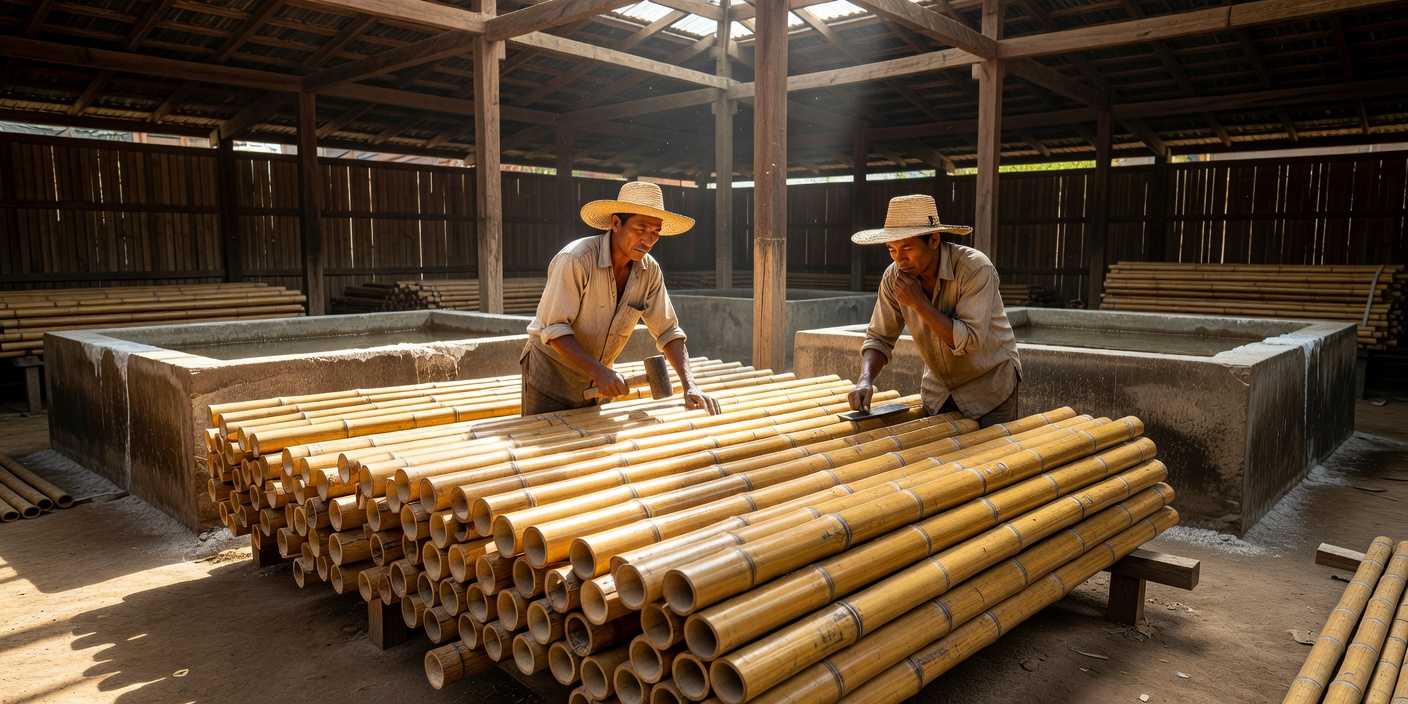
- Bambusa blumeana (Thorny Bamboo / Tre Gai): Thick-walled lower culms prized in Vietnam (famously bundled by Vo Trong Nghia Architects) where culms are soaked in river mud for three months and smoked over rice husk fires to caramelize internal sugars.
- Phyllostachys edulis (Moso Bamboo): Dominant in temperate East Asia (Zhejiang and Fujian provinces) and the primary feedstock for engineered glued-laminated bamboo lumber (GluBam).
Material Comparison: Embodied Energy & Maintenance
| Material Assembly | Typical Span / Role | Preservation Method | Maintenance Cycle |
|---|---|---|---|
| Round Petung Bamboo (Dendrocalamus asper) |
6 m – 18 m arches & space trusses | 8% disodium octaborate tetrahydrate solution (10-day bath) | Inspect pins & recoat exposed ends every 36 months |
| Reclaimed Ulin Ironwood (Eusideroxylon zwageri) |
3 m – 5 m deck joists, sill plates, wet piers | Naturally dense silica & extractives (Class 1 durability) | Clean surface algae annually; 50+ year structural life |
| Alang-Alang / Lalang Thatch (Imperata cylindrica) |
Roof pitch ≥ 35° for rapid drainage | Tightly combed 350 mm battens over breathable sarking | 8 – 12 years in humid lowlands; 15 years at windy ridges |
| Stabilized Rammed Earth (Local laterite + 6% lime) |
Load-bearing thermal mass walls (400 mm thick) | Deep roof overhang + 300 mm stone plinth against capillary rise | Re-apply breathable silicate water repellent every 10 years |
“Good boots and a big hat: lift the bamboo column forty centimeters off the damp earth on a stone or steel shoe, and give the roof enough overhang that rain never touches the culm above a thirty-degree angle.”— Jorg Stamm, Master Bridge & Pavilion Builder, Workshop Manual Notes
Why Bolted Mortar Joints Replaced Rope Lashing
While traditional sugar-palm fiber (ijuk) lashing works well in small agricultural shelters where villagers tighten bindings seasonally, public cultural pavilions and two-story retreats experience creep deflection under variable live loads. Modern structural bamboo engineering drills a 25 mm hole into the internode cavity adjacent to a bolted steel threaded rod, injects high-strength cementitious grout or bio-resin into the chamber, and locks the shear force against the dense diaphragm node wall. This hybrid detail prevents bolt-hole splitting while keeping steel hardware concealed inside the culm.